
Centre for Strategic Resilience Evidence-based training to support the mental health and resilience of first responders, helping professionals, and their families.

  • Practical body- and brain-based tools
  • Grounded in science and wisdom traditions
  • Designed for individuals, organizations, and communities

Explore Training Contact Ed

What is Strategic Resilience?

The Centre for Strategic Resilience was created to help individuals, organizations, and communities understand stress and trauma – and learn how to mitigate their effects. Our focus is the health and well-being of each person, with the understanding that when one person becomes more resilient, the benefits ripple out to families, co-workers, and communities.

Strategic Resilience weaves together:

  •  Ancient wisdom traditions – practices for presence, compassion, and meaning.
  •  Evidence-based science – practical tools from psychology, neuroscience, and stress research.
  •  Everyday application – protocols that can be used on shift, at home, and in everyday life.

Resilience is the ability to adapt and recover after acute stress, adversity, or trauma – and to savour the good moments along the way.

It’s not only about surviving worst-case scenarios. It’s about the micro-strategies and daily “Being Present” practices that turn ordinary days into better days and soften the impact of the hard ones.

 Strategic Resilience

WHO WE SERVE

Strategic Resilience for First Responders (SRFR) was originally developed during the fentanyl crisis in British Columbia as a response
to the overwhelming stress faced by paramedics and other first responders. Since 2017, SRFR has been adapted and delivered in Nova
Scotia with input from police, fire, paramedics, corrections, and emergency communications partners across the province.

Paramedics & EHS Communications

Paramedics & EHS Communications

Training can be adapted for ground ambulance, Telecare, medical communications, air medical transport operations, and the medical communications centre and more.

Corrections & Justice Services

Corrections & Justice Services

Training can be adapted for Correctional Services, Court Services, Public Safety, Sheriff Services, Victim Services, Nova Scotia Medical Examiner Service, Paralegal Services and more.

Police & Law Enforcement

Police & Law Enforcement

Training can be adapted for Federal and provincial/territorial policing Agencies.

Fire Services

Fire Services

Training can be adapted for Fire Departments, Fire Service Associations, Ground Search and Rescue Associations and more.

Hospital/Clinics services

Hospital/Clinics services

Training can be adapted for Doctors, Nurses, Practical Nurses, Continuing Care and other health professionals, staff and technicians.

Helping Professionals & Community Partners

Helping Professionals & Community Partners

Training can be adapted for Educational Institutions, Mental Health Professionals, Air-traffic Controllers, Adult and Youth Care Professionals, Family Resource Centres and others exposed to high stress roles.

OUR CORE TRAINING PATHWAYS

Microcredential Badges in Strategic Resilience

Participants can take individual badges or complete all four to receive a
Microcredential Certification in Strategic Resilience for Personal Resilience.

1 day

Foundations of Personal Resilience

  • Introduction to Strategic Resilience and Being Present
  • Understanding stress, trauma, and the nervous system
  • Core practices for daily regulation and recovery
1 day

Physical Protocols for Personal Resilience

  • Body-based practices for grounding and regulation
  • Movement, breath, and sensory-based tools
  • Building physical routines that support mental health
2 DAY

Mental & Spiritual Protocols for Personal Resilience

  • Mindfulness and cognitive strategies for managing thoughts
  • Meaning, values, and spiritual resources
  • Practices for hope, purpose, and moral resilience
2 day

Social Protocols for Personal Resilience

  • Building healthy peer support and culture
  • Communication tools for tough conversations
  • Strategies for supporting others’ wellness at work and at home.
Learn About The Microcredential
Strategic Resilience 

HISTORY OF SRFR

SRFR is an evidence-based psychoeducational program designed to help first responders build resilience in the face of daily operational stress and exposure to life-and-death situations.

  • Brought to Nova Scotia in 2017 by Dr. Ruth Lamb during the height of the fentanyl crisis.
  • Co-facilitated in partnership with Nova Scotia Community College from 2017–2020.
  • In 2020, after Dr. Lamb’s retirement, the program found new life and continued growth thanks to the unwavering support and passion of Vicki McKinnon, the Academic Chair at NSCC Truro. With Vicki McKinnon’s dedication and the years of research Ed Wohlmuth had invested, the program was fully reviewed, streamlined, and strengthened with direct feedback from police, fire, paramedics, and corrections partners.
  • In 2024, SRFR was developed into a formal microcredential, offering both retreat-style and one- and two-day course formats for individuals and agencies across the province through the Nova Scotia Community College.

SRFR is now part of a growing suite of programs offered through the Centre for Strategic Resilience and the Nova Scotia Community College.

“What Participants Are Saying”

Across cohorts, first responders consistently describe SRFR as life-changing,
practical, and deeply supportive.

Transformative Personal Growth & Empowerment

“I am a different person after participating in this class…”
“Thank you for reminding me that the power is within me.”

High-Quality, Thoughtful Course Design

“The material was well planned, well presented and shared in an incredibly effective way.”
“The instructors were exceptional! Their dedication and passion truly enhanced the learning…”

Practical Tools for Real-World Work

“This is the most encompassing and applicable course to emergency services agencies!”
“SRFR has helped me name and identify what I’ve been experiencing both internally and at work.”

Community & Connection

“Ed and Tayna created an open, safe space which has evolved into a true community of practice.”
“The sense of community and connection we have built during our time together is invaluable.”

Whole-Person, Holistic Approach

“It addresses areas of the body, heart, mind, spirit, and social.”
“The importance of these skill sets… is second to none.”

HOW TRAINING WORKS

How Strategic Resilience Training Works

This mirrors the simple three-step structure you liked on Transforming Tides.

Learn the Science & Story of Stress

Instructors guide participants through the realities of stress and trauma, how the nervous system responds, and what resilience looks like in real life.

Practice Simple, Doable Protocols

Through movement, breath, attention, and reflection, participants practice concrete skills they can use immediately—on shift, in the car, at home.

Build a Culture of Ongoing Support

Training emphasizes peer support, shared language, and practical tools that teams can bring back to their workplaces, families, and communities.

About the Centre & Facilitator

The Centre for Strategic Resilience was founded by Ed Wohlmuth, Registered Counselling Therapist and college faculty member, to expand the reach of SRFR and related resilience trainings beyond a single course.

Ed has over two decades of experience working in mental health and front-line environments, including provincial corrections and post-secondary education. His work blends body-based regulation practices, mindfulness-based Cognitive Behavioral approaches, and socio-ecological perspectives on resilience.

He is the co-creator and lead facilitator of Strategic Resilience for First Responders, and continues to collaborate with partners across Nova Scotia to support the well-being of first responders, helping professionals, and their families.

Meet Our Team

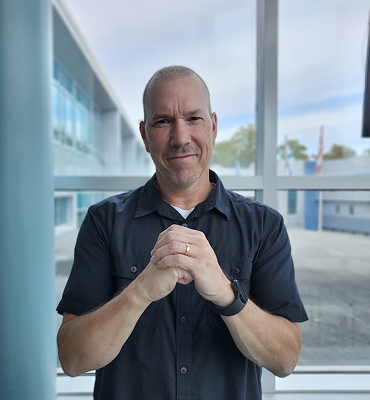
Ed Wohlmuth

Co-creator/Owner

Tayna Hitz

Facilitator

Jessica Lynn Wiebe

Facilitator

CONTACT & NSCC MICROCREDENTIAL INFO

Contact and Consulting

Reach out to discuss training options for individuals, teams, and organizations, or to explore how SRFR can be adapted to your context.

Email Ed
NSCC Microcredential Information

For details about the Strategic Resilience for First Responders Microcredential through Nova Scotia Community College:

Contact: Jen Ryan, M.A.Ed, Ph.D.

Workforce Development Manager, Research, Innovation and Workforce Development

Email: [email protected]
Email NSCC